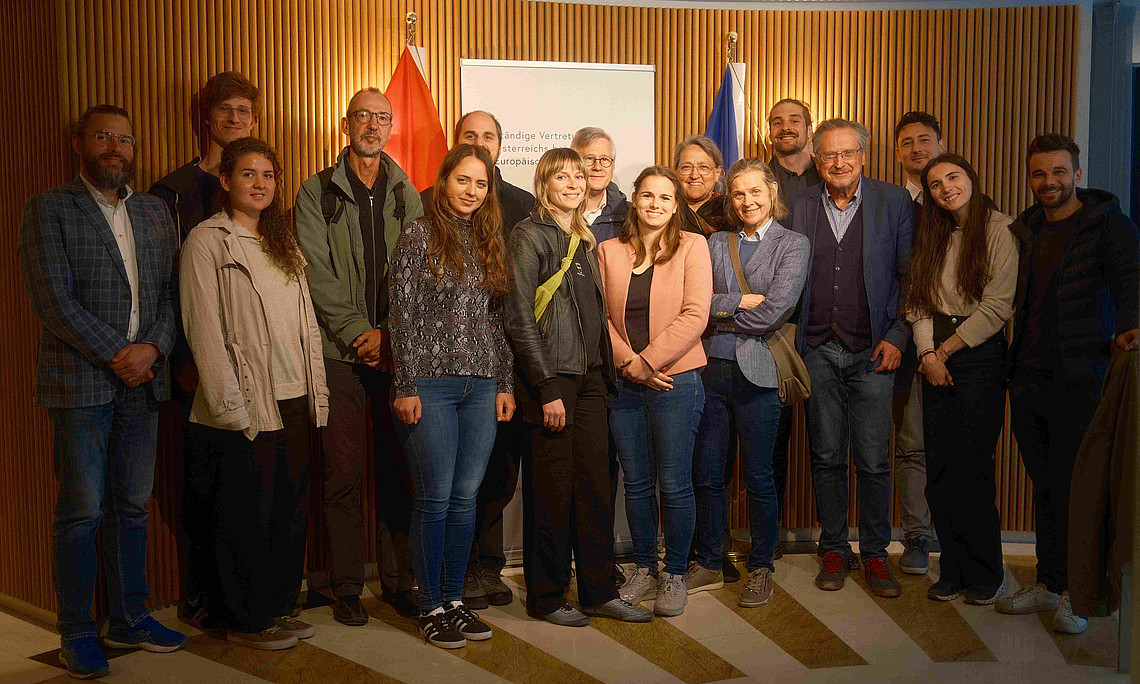
Ethischer und rechtlicher Leitfaden für den verantwortungsvollen Einsatz von KI in der Bildung
Am 20. Mai 2026 stellten Univ.-Prof.in Dr.in Maria Bertel und Mag.a Evelyne Putz im Rahmen des HFDT Brown-Bag Forums einen Leitfaden für den verantwortungsvollen Einsatz von KI in der Bildung vor. Der Leitfaden entstand im Rahmen des Erasmus+-Projekts EducationalAI. Dieses verfolgt das Ziel, Bildungsinstitutionen bei der verantwortungsvollen und zielgerichteten Nutzung künstlicher Intelligenz zu unterstützen.
Im Vortrag gaben Maria Bertel und Evelyne Putz einen Einblick in das Projekt sowie den Aufbau und die zentralen Inhalte des Leitfadens. Dessen erster Teil behandelt zehn ethische Prinzipien für den Einsatz von KI in der Bildung, unter anderem die Achtung menschlicher Autonomie, Fairness und Diskriminierungsfreiheit, Transparenz sowie akademische Integrität.
Der zweite Teil widmet sich den rechtlichen Rahmenbedingungen. Im Mittelpunkt stehen hier die europäische KI-Verordnung und ihre unterschiedlichen Risikokategorien, datenschutzrechtliche Vorgaben für den KI-Einsatz sowie die besondere Bedeutung der Kinderrechte bei KI-Nutzung im Bildungskontext.
Der Leitfaden bietet Lehrenden und Führungskräften praktische Hinweise, Beispiele und Leitfragen für einen reflektierten Umgang mit künstlicher Intelligenz. Er ist online in deutscher und englischer Sprache verfügbar, Zusammenfassungen liegen zudem in mehreren weiteren europäischen Sprachen vor.
Weitere Informationen sowie der Leitfaden sind auf der Website des Projekts EducationalAI verfügbar: https://educationalai.eu/ethical-guide
Vortragende:
Univ.-Prof.in Dr.in Maria Bertel ist seit 2023 Universitätsprofessorin für Öffentliches Recht und Digitalisierung am Institut für Öffentliches Recht und Politikwissenschaft der Universität Graz. Zuvor hatte sie die Professur für Öffentliches Recht mit Schwerpunkt Verwaltungsrecht am Institut inne. Ihre Forschung beschäftigt sich mit der Digitalisierung im Öffentlichen Recht, von strukturellen Fragen bis hin zur Verbindung von Digitalisierung mit Nachhaltigkeit.
Mag.a Evelyne Putz ist seit 2024 wissenschaftliche Mitarbeiterin im Arbeitsbereich von Univ.-Prof.in Dr.in Maria Bertel. Ihr Forschungsschwerpunkt liegt bei den verfassungs- und verwaltungsrechtlichen Herausforderungen der digitalen Transformation. Seit Oktober 2025 verfolgt sie als DOC-Stipendiatin der Österreichischen Akademie der Wissenschaften ihr Doktoratsstudium der Rechtswissenschaften mit Schwerpunkt auf Datenschutz-, Privatsphäre- und Sicherheitsfragen im Kontext von CBDCs und digitaler Identität.
An ethical and legal guide on the responsible integration of AI in education
On 20 May 2026, Prof. Dr. Maria Bertel and Mag. Evelyne Putz presented a guide on the responsible integration of AI in education at the HFDT Brown-Bag Forum. The guide was developed as part of the Erasmus+ project EducationalAI, which aims to support educational institutions in using artificial intelligence responsibly and purposefully.
Maria Bertel and Evelyne Putz provided an overview of the project as well as the structure and central content of the guide. Its first part addresses ten ethical principles for the use of AI in education, including respect for human autonomy, fairness and non-discrimination, transparency, and academic integrity. The second part focuses on the legal framework. Here, the emphasis is on the European AI Act and its different risk categories, data protection requirements for the use of AI, and the significance of children's rights when AI is used in educational contexts.
The guide offers educators and institutional leaders practical recommendations, examples and guiding questions for a critical and informed approach to artificial intelligence. It is available online in German and English, and summaries are also available in several other European languages.
Further information and the guide itself are available on the website of the EducationalAI project: https://educationalai.eu/ethical-guide