Begin of page section:
Page sections:

  • Go to contents (Accesskey 1)
  • Go to position marker (Accesskey 2)
  • Go to main navigation (Accesskey 3)
  • Go to sub navigation (Accesskey 4)
  • Go to additional information (Accesskey 5)
  • Go to page settings (user/language) (Accesskey 8)
  • Go to search (Accesskey 9)

End of this page section. Go to overview of page sections

Begin of page section:
Page settings:

English en
Deutsch de
Search
Login

End of this page section. Go to overview of page sections

Begin of page section:
Search:

Search for details about Uni Graz
Close

End of this page section. Go to overview of page sections


Search

Begin of page section:
Main navigation:

Page navigation:

  • University

    University
    • About the University
    • Organisation
    • Faculties
    • Library
    • Working at University of Graz
    • Campus
    Developing solutions for the world of tomorrow - that is our mission. Our students and our researchers take on the great challenges of society and carry the knowledge out.
  • Research Profile

    Research Profile
    • Our Expertise
    • Research Questions
    • Research Portal
    • Promoting Research
    • Research Transfer
    • Ethics in Research
    • Commission for Scientific Integrity
    Scientific excellence and the courage to break new ground. Research at the University of Graz creates the foundations for making the future worth living.
  • Studies

    Studies
    • Prospective Students
    • Students
  • Community

    Community
    • International
    • Location
    • Research and Business
    • Alumni
    The University of Graz is a hub for international research and brings together scientists and business experts. Moreover, it fosters the exchange and cooperation in study and teaching.
Topics
  • Sustainable University
  • Researchers answer
  • Work for us
Close menu

End of this page section. Go to overview of page sections

Begin of page section:
You are here:

University of Graz Human Factor in Digital Transformation News Recap: HFDT - Brown-Bag Forum with Sabine Klinger, Susanne Sackl-Sharif, and Arndt Schäfer
  • About the network
  • Our Research
  • Doctoral program
  • Our Events
  • Seasonal School zu Standarisierung
  • EURAS 2026
  • Registration for the HFDT mailing list
  • News

End of this page section. Go to overview of page sections

Wednesday, 14 January 2026

Recap: HFDT - Brown-Bag Forum with Sabine Klinger, Susanne Sackl-Sharif, and Arndt Schäfer

Mai BBF ©Illustration: Julia Stubenböck (Out of Habit Design)

Diversity-sensitive use of Artificial Intelligence. Digital / AI Literacies and feminist prompting in social work

On 14 January 2026, Sabine Klinger, Susanne Sackl-Sharif and Arndt Schäfer presented insights from the Elisabeth List Fellowship project “Diversitätssensibler Umgang mit Künstlicher Intelligenz. Digital / AI Literacies und feministisches Prompting in der Sozialen Arbeit”, which was carried out at the Institute of Educational Sciences at the University of Graz and concluded at the end of February 2026.

From an interdisciplinary and feminist perspective, the project explored how generative AI can be used in social work without uncritically reproducing gender stereotypes and inequalities. Since social work engages with vulnerable groups, a critical and diversity-sensitive approach to AI is considered essential. A central outcome of the project is a digital orientation guide – now publicly available – that offers practitioners and managers in social work hands-on recommendations for a gender- and diversity-sensitive use of AI, drawing on concepts of Digital & AI Literacies and on a feminist prompting framework.

Further information on the project can be found here: https://digitalesozialearbeit.github.io/

The guide is publicly available in German at: https://digitalesozialearbeit.github.io/orientierungsleitfaden/

Speakers

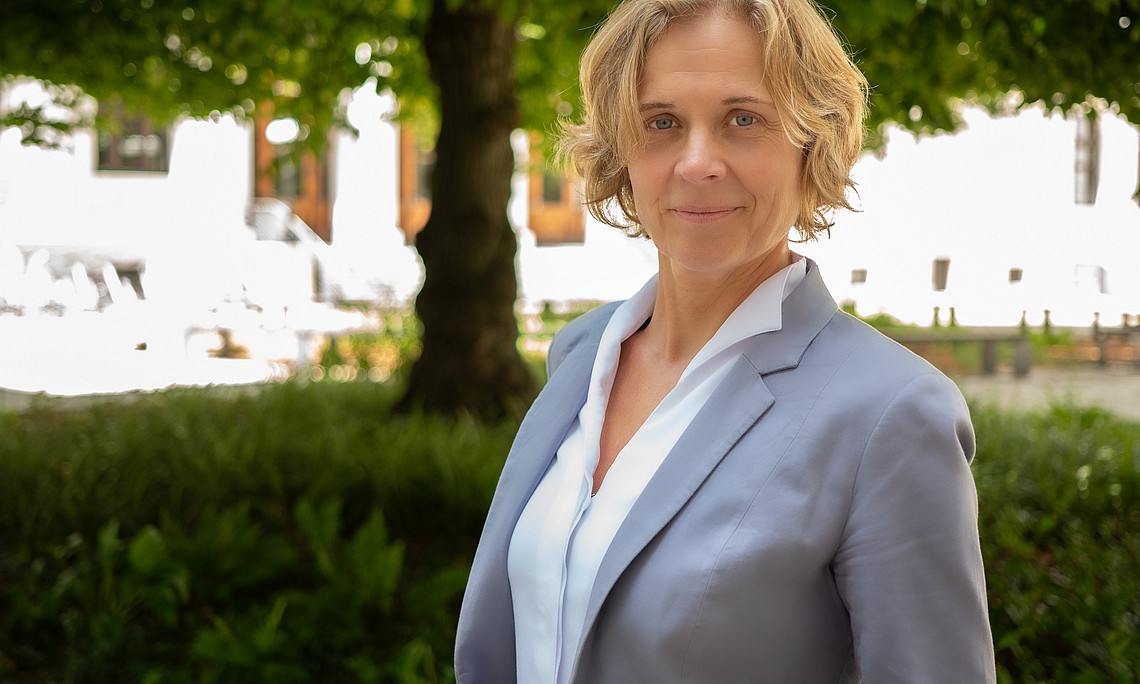
Ass.-Prof.in Dr.in Sabine Klinger, MA, is Assistant Professor with a focus on Education, Gender and Social Transformation at the Institute of Educational Sciences at the University of Graz. Her research and teaching address digitalisation, Artificial Intelligence, AI Literacies, social work, diversity and gender, as well as qualitative and participatory social research.

Mag.a Dr.in Susanne Sackl-Sharif, Bakk.a MA, is a sociologist and musicologist based in Graz and Vienna. Her research focuses on digitalisation processes in social work, Digital and AI Literacies, political participation, gender and diversity studies, and popular cultures. 

Arndt Schäfer, M.Sc., is a psychologist researching human-machine interaction at the University of Graz. His work focuses on trust in robots and AI and on the human-centred design of socio-technical systems in the workplace. In several research projects, he has examined requirements for a human-centred introduction of digital technology at work and the qualification needs of users of artificial agents. Methodologically, he draws on quantitative and qualitative approaches to the analysis of empirical data (e.g. from lab experiments and interviews).

Related news

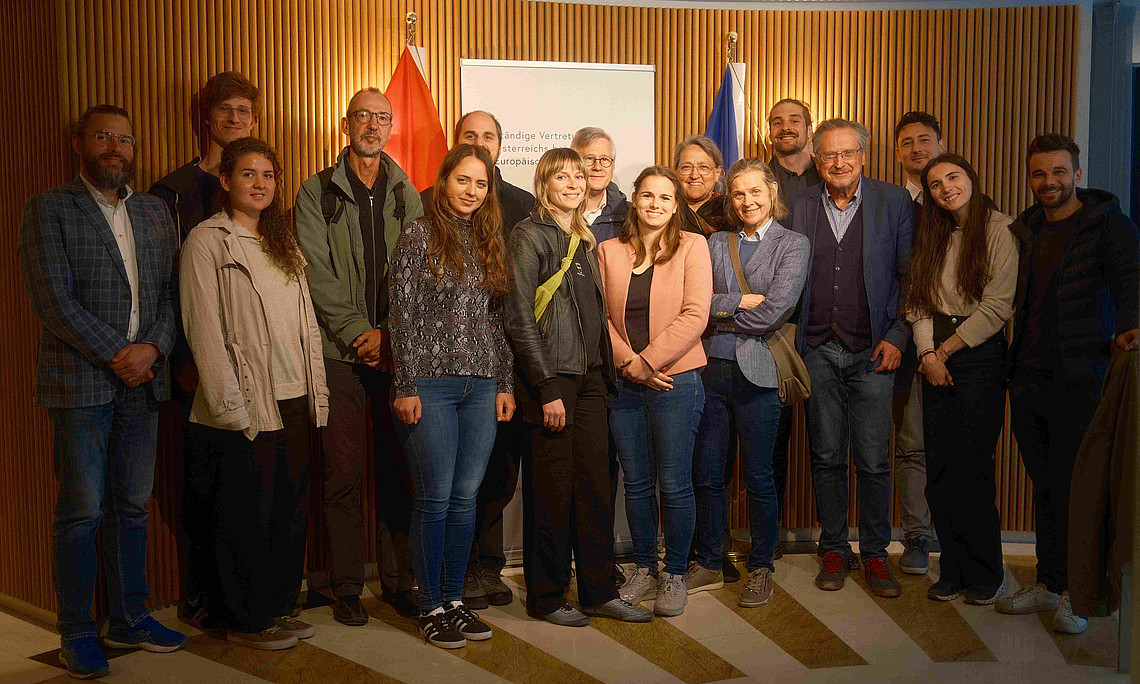
Human Factor in Digital Transformation HFDT goes to Brussels

Exkursion im Rahmen des DQ im Sommersemester 2025 *********** Excursion as part of the DQ in the summer semester 2025

Recap: HFDT - Brown-Bag Forum: Stefan Baumgarten

Neue Perspektiven kritischer Translationswissenschaft: Fünf Thesen zur KI-gestützten Translationsmaschine

Recap: Workshop EDU4Standards.eu at 17th of April 2025

Empowering Standardisation through Education in Europe - Innovating how standardisation is taught in European Higher Education

Recap: HFDT - Brown-Bag Forum with Sabina Hodzic

Implications of generative AI for work design:Insights from the A-KI-A project

Begin of page section:
Additional information:

University of Graz
Universitaetsplatz 3
8010 Graz
Austria
  • Contact
  • Web Editors
  • Moodle
  • UNIGRAZonline
  • Imprint
  • Data Protection Declaration
  • Accessibility Declaration
Weatherstation
Uni Graz

End of this page section. Go to overview of page sections

End of this page section. Go to overview of page sections

Begin of page section:

End of this page section. Go to overview of page sections